Singing Classroom
#HKICF2025

“What You Need to Know About Breathing”
Editors: Simon Tse

When you sing, it’s important to stand in a way that helps you breathe well.
Here’s how to do it:
- Stand Tall but Not Stiff: Imagine a string pulling your head up gently. This helps you stay straight without being too stiff. Don’t lean your head forward or lift your chin too much because that can hurt your neck.
- Open Your Chest: Lift your chest with the help of intercostal muscles to help you breathe easily. Don’t raise your shoulders or make your body stiff.
- Stable Feet: Stand with your feet shoulder-width apart and keep your knees slightly bent. Make sure your weight is balanced on both feet.
- Posture Check: Close your eyes and take a deep breath. If you feel tight or wobbly, move your body around until it feels comfortable and straight.
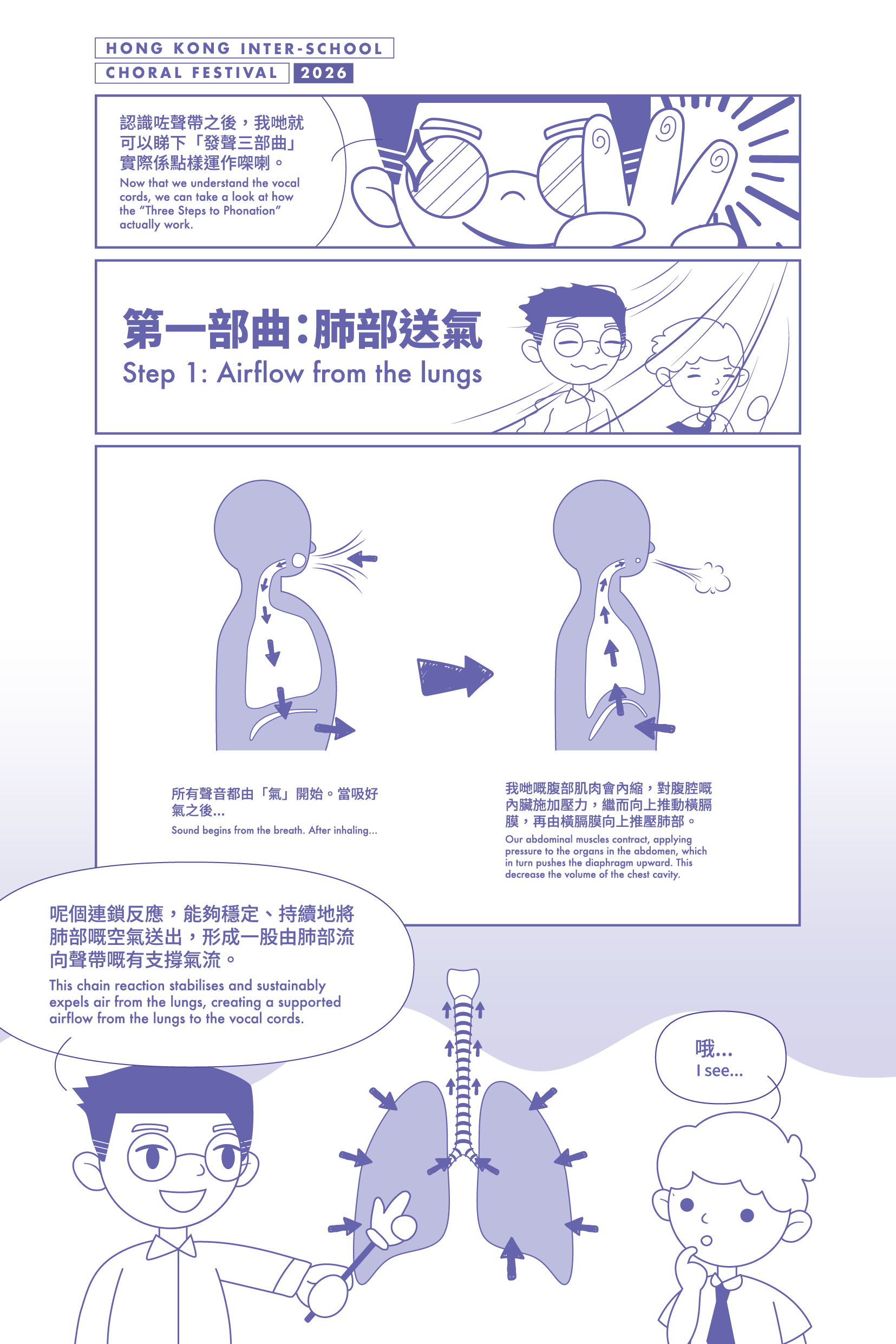
This refers to how your diaphragm works when you breathe in: When you take a deep breath, your diaphragm moves down, pushing on your tummy and making it feel like air is filling up your belly. Remember, air actually goes into your lungs only, not your belly button! The tummy expands because you’re breathing deeply.
Here are some easy ways to check:
- Cool Air Test: Breathe in through your mouth and feel the cool air coming in your throat. This shows your airway is open.
- Jaw-Drop Breathing: Pretend to yawn while saying “ah” to open your throat and let more air in, but keep the jaw relaxed and avoid overextending. Focus on lifting the roof of your mouth gently to reduce tension.
- Relaxed Shoulders: Keep your shoulders down and relaxed while you breathe. Don’t lift them!

Breathing for singing is deeper and more controlled than regular breathing. Here’s how they are different:
- Everyday Breathing is quick and not very deep. It gives you just enough air to live.
- Singing Breathing uses your lower tummy muscles for deep, steady breaths. When you practise that, your diaphragm moves down more to let in lots of air, and you breathe out slowly to hold long notes.

Yes! You might feel a little stretch in your back because your diaphragm is there. Try this exercise:
- Sit down and lean a little forward.
- Put your hands on the sides of your back
- Take a deep breath and notice how your back expands a bit
This helps you feel how deep breathing works.

The best way is called balanced breathing. It mixes using your chest and tummy for singing. Here are four types of breathing:
- Clavicular Breathing: This is when you lift your shoulders and breathe into your upper chest. It fills your lungs with air but can make you tense—this isn’t good for singing.
- Chest Breathing: This makes your rib cage expand for bright sounds, but it isn’t very stable. It works for fun, light songs.
- Abdominal Breathing: This uses your diaphragm for deep air and gives warm, rich sounds. But it might not be bright enough for some songs.
- Balanced Breathing: This mixes chest and abdominal breathing for strong, steady airflow. It’s suitable for stretchy vocal lines and most types of vocal genres.
“What You Need To Know About Phonation”
#HKICF2026
Editors: Simon Tse, Pansy Lau, Paco Sze
Consultant: Ms. Cheuk Yee Wong