Choral Fun Facts
#HKICF2025
Editors: Omarr Cheng, Moon Kong, Simon Tse
1. The World Record of Greatest Vocal Range & Highest Note by a Female Singer

How high can you sing? Discover the remarkable Georgia Brown from Brazil, the Guinness World Record holder for the greatest vocal range and highest note. She boasts an astonishing range of eight octaves, spanning from G2 to G10. This extraordinary achievement was officially verified on August 18, 2004, at the Aqui Jazz Atelier Music School in São Paulo, Brazil. Music experts meticulously confirmed her full range using a piano, violin, and Hammond organ.
2. The World Record for the Largest Choir
Imagine singing alongside 121,440 people! This incredible event took place on January 30, 2011, in India, when The Art of Living organised the world’s largest choir, a record recognized by Guinness World Records. The choir sang in unison for over five minutes, creating an unforgettable experience. To ensure everything ran smoothly, the event was meticulously managed with the assistance of 2,429 stewards, who coordinated the massive gathering with precision and care.

(Note: The Guinness World Record for the largest choir is not the one pictured.)
3. Choir Singers Synchronise Their Heartbeats
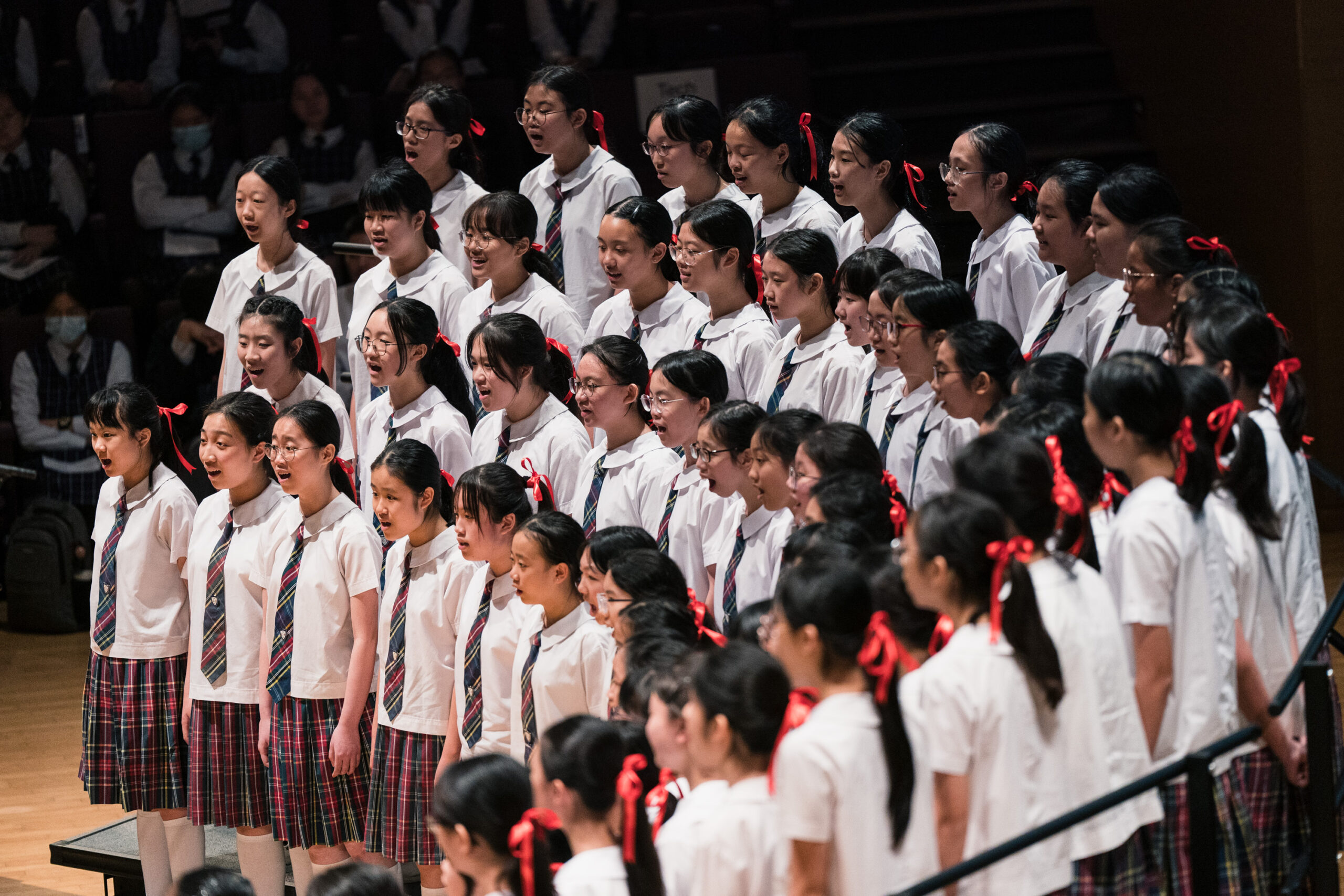
Here’s a fascinating fact that merges science with music! Research from the University of Gothenburg reveals that choristers can synchronise their heartbeats while singing together. This synchronisation occurs because their breathing becomes slower and more regular during singing, leading to a phenomenon known as respiratory sinus arrhythmia (RSA). When singers breathe in unison, their heart rates align, fostering a profound sense of unity in both sound and physiological responses.
4. Singing Makes You Happy!
Perhaps you may not be the singer with the widest vocal range or have had the opportunity to perform with countless individuals, but as a chorister, you can undoubtedly find immense joy in singing. Numerous studies indicate that singing releases endorphins, serotonin, and dopamine—the “happy” chemicals that boost your mood and enhance your overall sense of well-being. So, keep singing, everyone!

#HKICF2026
Editors: Moon Kong, Jonathan Chan
5. There are always not enough tenors

In the choral world, tenors are always the ones that sell records and are worshipped (for example world-famous tenors like the three tenors: Pavarotti, Domingo, and Carreras.) The word tenor comes from the word ‘tenere’ in Latin, which means to hold. In early music, the tenor voices were the ones that held the tune in strong, sustaining notes, while the rest of the choir wove harmonies and counterpoints around them. Tenors often sing the melody or counter-melody, adding brightness and energy to the choral sound; there are fewer men who achieve the range of a tenor as more men have the range of a baritone. Therefore, tenors are relatively rare by their range and the function in choir.
6. The Longest Continuous Concert by a Choir
The Guinness World Record’s Longest Marathon Singing by A Choir/Group Title is held by the Durg – Bhilai Lifecraft singers in India with the record The new record lasted for 31 hours 45 minutes from 5 to 6 February 2005. They broke the previous record held by the Ottawa Merman Youth Choir Group who had sung for 22 hours. They sang traditional prayers (songs that serve for religious purposes), rather than pop songs. Ujjwal Patni, chief organiser of the event, said, “We decided to create a record with a big difference, so that it cannot be broken soon and easily.”

7. The Oldest Choral Repertoire Was (Literally) Carved in Stone (2154 years ago) !

In 1893, a French excavation team uncovered multiple fragments dated at 128 BC from the Athenian Treasury at Delphi. Though some parts of the stones were either lost or indecipherable, scholars believe that, through reconstruction and musical notation, the fragments form two cult hymns to praise Apollo, the Greek god of poetry and the sun. Both hymns are monophonic, meaning that they were sung in unison. Through translation into modern musical notation, the Delphic Hymns were widely performed throughout the 19th and 20th centuries in Europe, England, and the United States. Such performances were accompanied by the harp and the harmonium, replacing the kithara and aulos, both ancient Greek instruments.
8. Choral singing increases social connection, which benefits mental well-being
Choral groups offer the perfect environment for nurturing all kinds of social relationships. Choir is a group of people that share collaborative experiences, singers learn, sing and perform together, the non-verbal communication creates trust and camaraderie with the choir. This will evoke strong emotions and allow individuals to connect with the team on a deeper level through shared feelings. Consistent engagement is also essential for building connections. Regular practice sessions and performance create opportunities for social interaction and deepening relationships over time through consistent interaction! Did you make any good friends in your choir too?